Rue de l'Université: the famous street view of the Eiffel Tower
Where to stand on Rue de l'Université for the Eiffel Tower street view, how to get the shot safely in traffic, the best hours and how to respect the neighbors.
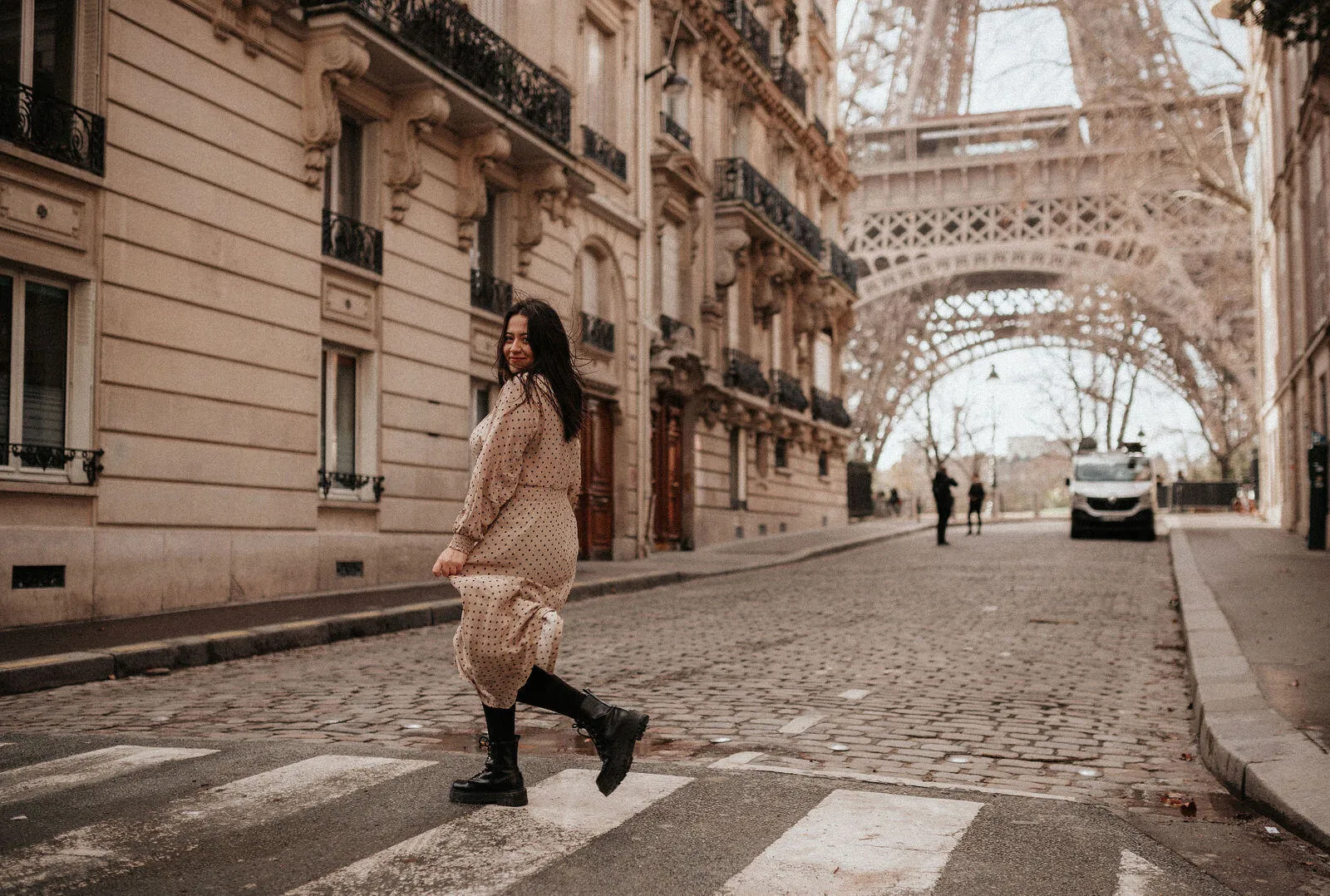
The famous street view of the Eiffel Tower is on Rue de l’Université, in the 7th arrondissement, on the last blocks before the street dead-ends next to the tower, especially around the crossing with Avenue de La Bourdonnais. From there the tower closes off the end of the street, enormous and close, framed by cream stone apartment buildings. It is also a real street with traffic and parked cars, so this guide covers exactly where to stand, how to get the shot without stepping into the road, the best hours, and how to be a good guest in someone’s neighborhood.
Where exactly is the Rue de l’Université view?
Rue de l’Université is long: almost 2.8 km, from Saint-Germain-des-Prés all the way west to the Eiffel Tower. Only the western end gives the view. Heading west, the street crosses Avenue Bosquet, then Avenue Rapp, then Avenue de La Bourdonnais, and finally stops at Allée Paul-Deschanel, beside the garden at the foot of the tower.
| Practical detail | What to know |
|---|---|
| Address for your map | Rue de l’Université and Avenue de La Bourdonnais, 75007 Paris |
| The view | Looking west, from around Avenue Rapp to the end of the street |
| Distance to the tower | Roughly 200 m from the Avenue de La Bourdonnais crossing, about 500 m from Avenue Rapp (approximate) |
| Nearest stations | RER C Pont de l’Alma (about 500 m on foot from the Avenue de La Bourdonnais crossing, approximate); metro line 9 Alma-Marceau, across the river; metro line 8 École Militaire, about 10 minutes on foot |
| From the tower | About 5 to 10 minutes on foot from the tower’s north side |
| Cost | Free, public street |
The farther east you stand (toward Avenue Rapp or Avenue Bosquet), the more street you get in the frame and the smaller the tower looks. The closer you get to Avenue de La Bourdonnais and the last block before the tower, the more the tower fills the end of the street, until its arches are almost too big to fit. Most travel guides point to the Avenue de La Bourdonnais crossing as the classic spot; step back toward Avenue Rapp if you want more street in the picture.
What the photo looks like
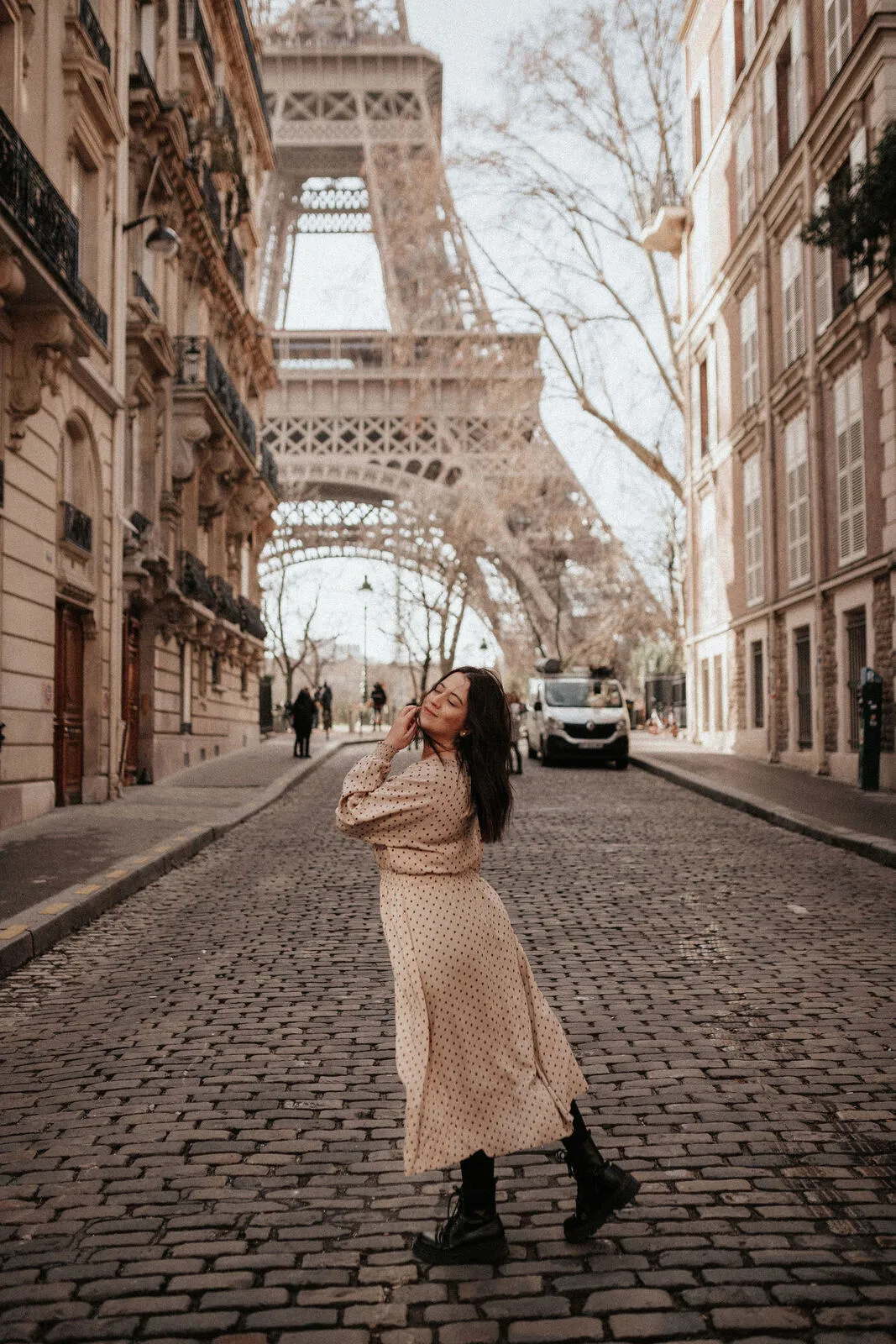
The picture everyone wants is simple: a narrow Parisian street, balconies and stone facades on both sides, and the tower standing at the end like a backdrop. It feels very “Paris”, and very different from the open views at Trocadéro or the Champ de Mars.
There are three ways to make it:
- The long-lens street portrait. The photographer stands well back up the street and zooms in, while you stand on the sidewalk or at a corner closer to the tower. The zoom pulls the tower forward so it looks huge behind you. On a phone, use the 2x or 3x setting rather than walking closer.
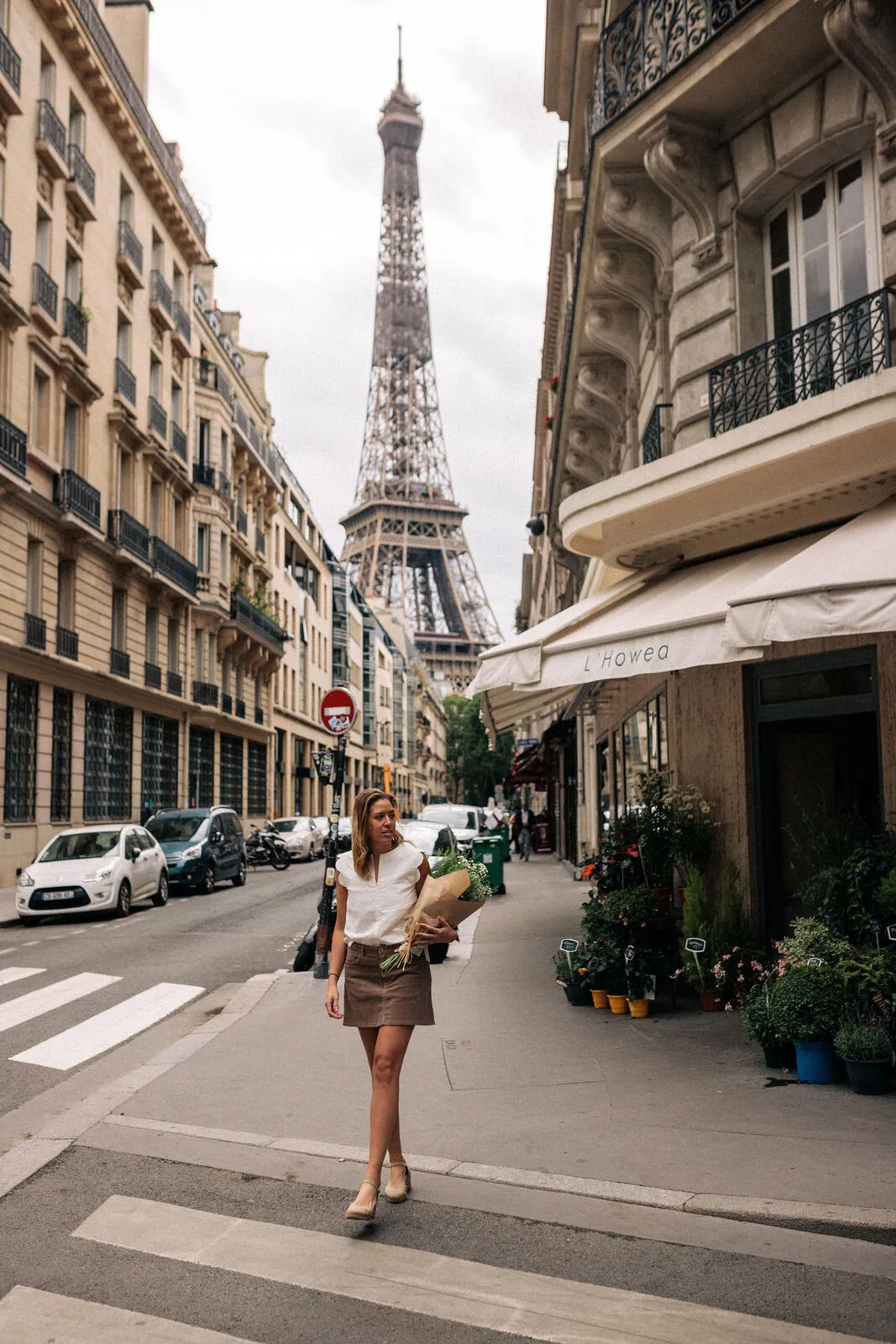
- The walking shot. You walk along the sidewalk toward the tower, hand in hand, while the photographer follows. Natural, easy for camera-shy people, and safe.
- The doorway or corner frame. A building entrance, a café corner or a lamp post in the foreground, with the tower behind. This hides parked cars and adds depth.
Traffic and safety: getting the shot without standing in the road
Many of the pictures you see online show people standing in the middle of the street. Those are taken in the few seconds when the road is empty, and they are not worth a risk. Rue de l’Université is a working street: cars, delivery vans, scooters and bikes use it at all hours, and drivers coming around a corner do not expect someone posing in the lane.
How photographers who know the spot handle it:
- Stay on the sidewalk. With a longer lens, the photographer can make the street look open and empty while you stand safely at the curb. This is the single best trick for this spot.
- Use the crossings only at a green pedestrian light, and only for a quick frame. Never linger in a crosswalk once the light changes.
- Appoint a lookout. If you are a couple with a photographer, the photographer watches the road; if you are taking your own pictures, one of you watches traffic while the other shoots.
- Never sit or lie in the road, never stand between parked cars where drivers cannot see you, and don’t use parked cars or scooters as props.
- Mind your phone and bag. Put down nothing on the curb; keep valuables close, as anywhere busy with visitors.
- Skip tripods in the street. They block the sidewalk and are hard to move quickly.
Best hours for light and an empty street
When you face the tower on Rue de l’Université, you are looking roughly west-southwest (the sun directions below are our own approximate calculation). The street is narrow, so its facades are often in shade while the tower is in the sun, which is part of its charm.
| Time | Light | Street |
|---|---|---|
| Sunrise to mid-morning | The sun is behind you and lights the tower from the front, while the street stays in soft shade | The calmest moment; Sunday mornings tend to be quietest |
| Late morning to mid-afternoon | Bright, contrasty, less atmosphere | Deliveries, traffic, pedestrians |
| Late afternoon | From about November to February the sun goes down near the tower: glowing sky, backlit silhouettes | Busier with traffic and people heading home |
| Evening and night | The illuminated tower at the end of a dark street | Quieter, but drivers see you less well: extra care |
Our recommendation is early morning, ideally within an hour or so of sunrise: the light is flattering, the tower is lit, and you can take your time between the occasional car. For more on timing your Eiffel Tower photos for quiet moments, see our guide on how to get an Eiffel Tower photo without tourists.
If you are thinking about a night version: your own photos of the illuminated tower are fine for personal use. Commercial use of the tower’s lighting needs the authorization of the tower’s operator.
Neighbors, deliveries and image rights
This end of Rue de l’Université is a residential neighborhood with shops, offices and apartments. The view survives because visitors stay discreet.
- Keep it short and quiet. Fifteen to twenty minutes is plenty for this spot within a longer session.
- Give way to residents, delivery drivers and anyone parking. Clear doorways and garage entrances.
- Don’t photograph people’s windows or front doors up close, and avoid close-ups of identifiable passers-by. In France, anyone recognizable can object to the use of their image, wherever the photo was taken.
- No litter, no confetti, no props left behind.
About permits: the City of Paris starts from the principle that you are free to photograph in public space, and personal photos need nothing. Organized film and photo shoots on streets need a prior declaration or an authorization, depending on the size of the crew. A small private session with one photographer and a camera is a gray zone in the official texts, which are written for productions. Keep the session light and your photographer will know how to handle it.
Nearby: Rue Saint-Dominique and the Right Bank views
One block south, Rue Saint-Dominique gives a livelier version of the street view: shopfronts, cafés and the Fontaine de Mars, with the tower appearing toward the street’s western end at Place du Général-Gouraud. It suits a “coffee in hand” look, and early morning is again the best time.
A short walk away, the lawns of the Champ de Mars offer the opposite of a street view: open space and the whole tower from below. The City has “rested” the Champ de Mars for film and photo productions until further notice, so keep any session there light and discreet. And across the river, Avenue de Camoëns frames the tower between buildings from a quiet, car-free balustrade, which many couples find more relaxed than a street with traffic. The City has closed that avenue to organized shoots until further notice, so treat it as a short, discreet stop.
For every viewpoint with its best hour and crowd level, read our guide to the best Eiffel Tower photo spots. And if you would rather leave the traffic-watching to a professional, you can find photographers who shoot around the tower in our directory and contact them directly.
FAQ
Where is the famous street view of the Eiffel Tower?
On Rue de l’Université in the 7th arrondissement, on its last blocks before it ends next to the tower. The crossing with Avenue de La Bourdonnais is the classic spot; farther back, toward Avenue Rapp, the tower looks smaller and the street longer. Rue Saint-Dominique, one block south, has a similar view.
What is the nearest metro to Rue de l’Université?
The closest station is Pont de l’Alma on RER C, a few hundred meters from the view. Alma-Marceau (metro line 9) is just across the river, and École Militaire (line 8) is about 10 minutes on foot.
Is it legal to stand in the street for a photo?
Pedestrians belong on the sidewalk and crossings, and standing in a traffic lane is unsafe whatever the rules. Take the picture from the sidewalk with a longer lens, or at a crossing while the pedestrian light is green. The photo looks the same, and nobody gets hurt.
What is the best time to photograph the Eiffel Tower from Rue de l’Université?
Early morning. The sun is behind you and lights the tower from the front, the street is in soft shade and traffic is light. In late afternoon from about November to February, the sun sets near the tower, which gives a glowing sky but strong backlight.
Is Rue de l’Université crowded?
It is rarely crowded with people, but it always has parked cars and some traffic. The challenge here is cars, not tourists, which is why early mornings and a long lens work best.