Do you need a permit for a photoshoot in Paris? The 2026 rules explained
Do you need a permit for a photoshoot in Paris? The City's rules, the gray zone for private sessions, and the Louvre, Palais-Royal and Versailles rules.
Whether you need a permit for a photoshoot in Paris depends on who is shooting, for what purpose, and where. Taking your own photos in Paris is almost always free and allowed outdoors; organized shoots on public space need an authorization from the City; several famous sites have their own manager and rules; and a small private session with one hired photographer sits in a gray zone that no official text addresses directly. Below, we explain the official rules in plain English, site by site, as they stood in October 2026, and what to ask your photographer before you book.
Do you need a permit? The short answer in three cases
French rules make sense once you separate three situations.
| Situation | Example | What the rules say |
|---|---|---|
| Your own photos as a visitor | Selfies, a friend photographing you at the Trocadéro | Free and allowed outdoors almost everywhere. The City’s principle is the freedom to photograph, within image rights and public safety. |
| A hired photographer for a private client | A one-hour couple session with one photographer and a camera | A gray zone. The City’s rules are written for productions, and nothing official says how they apply to a small private session. Some site managers set their own rules. |
| A commercial or organized production | A brand campaign, a fashion editorial, a crew with lights and assistants | Authorization required, often with fees, from the City or the site’s manager. |
Most travelers booking a photographer are in the middle row. Keep that in mind as you read the rest.
What the City of Paris rules say
The City of Paris (through Paris Film, also called the Mission Cinéma) manages shoots in streets, on bridges and in city parks. Its starting point, on its page about what you may photograph, is that “le principe est la liberté de photographier”: the principle is the freedom to photograph, balanced with people’s image rights, copyright and public safety.
For organized shoots, its filming FAQ (updated January 2025) is clear: “Tout tournage ou prises de vues dans les rues de Paris nécessite l’obtention d’une autorisation” (our translation: any filming or photo shoot in the streets of Paris requires an authorization). In practice there are two levels:
- A prior declaration (déclaration préalable) for small crews: fewer than 10 people, light equipment, streets and/or bridges only, no vehicles parked. It must be filed one week (five working days) ahead and, according to Paris Film’s English page, carries no fee.
- A full authorization for everything else, including gardens, parks, canals, riverbanks and markets. It is requested through the City’s AGATE app three weeks (15 working days) ahead, and fees for occupying public space generally apply.
Two more requirements appear in the same FAQ. Since 1 January 2025, a signed charter must be attached to the first request for a film or photo shoot, with single-person photo shoots exempt. And insurance is required “pour tout type de tournage”, for any type of shoot.
Paris Film does not handle every famous place. Its page on preparing a shoot lists sites whose managers you must contact directly, including the Eiffel Tower, the Louvre and the Tuileries, the Palais-Royal, Versailles, the Luxembourg garden, the Jardin des Plantes, the Musée d’Orsay and the Trocadéro esplanade. We cover the main ones below.
You will notice who files these requests: the photographer or the production company, not the client. If anything has to be declared, it is your photographer’s job.
The gray zone: a private session with one photographer
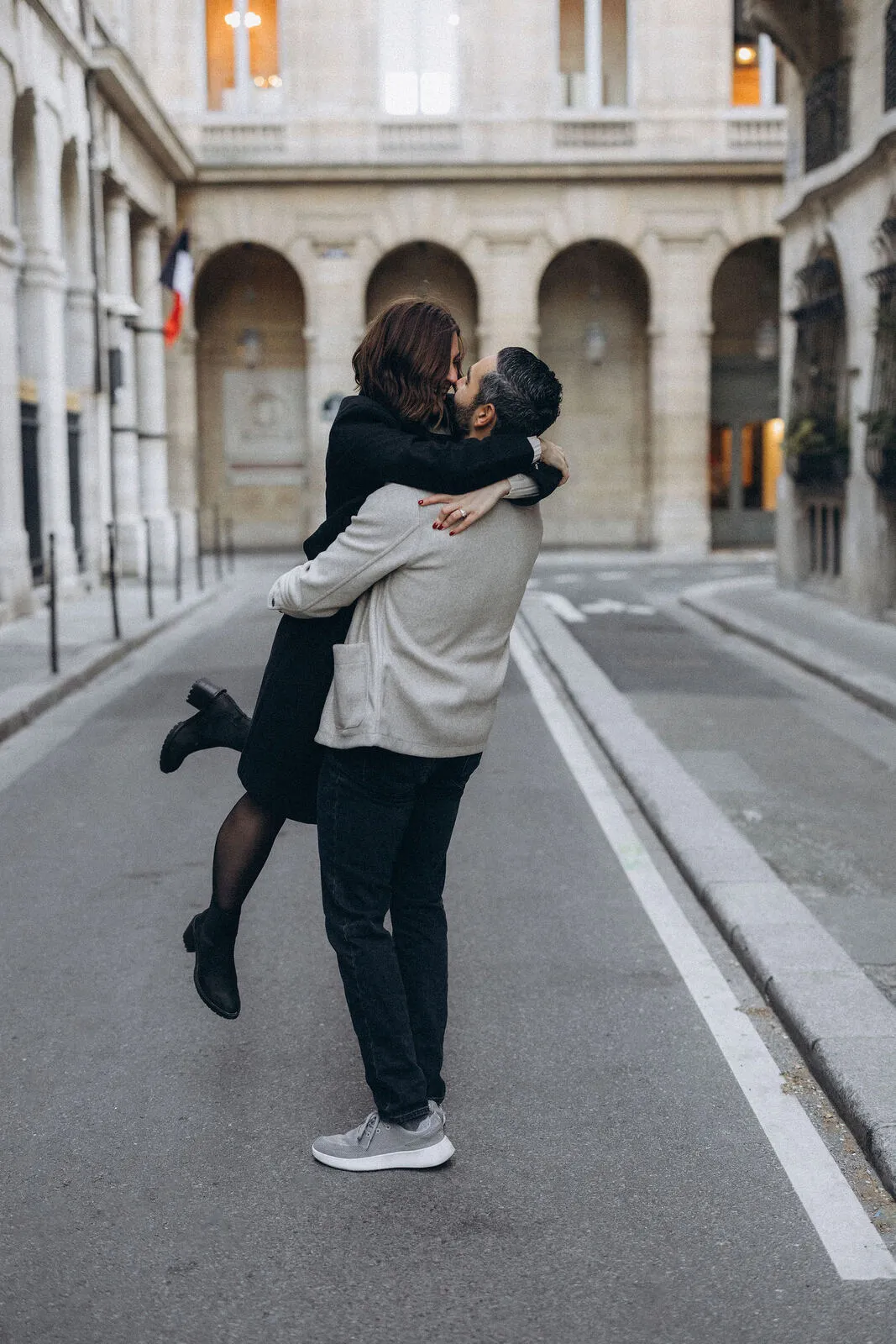
Here is the honest situation. The City’s pages are written for productions: film crews, advertising, fashion shoots. No official page says whether a one-hour portrait session for a visiting couple, with one photographer and a camera, needs a declaration. In practice, these sessions happen every day across Paris.
So the fairest summary is this: Paris requires authorization for organized shoots on public space; small private portrait sessions are a gray zone, and good photographers know which spots are tolerated and which managers require a permit.
What this means for you in practice:
- Do not assume either extreme. It is not true that “no permit is ever needed”, and it is not true that every session needs one.
- Keep the setup light. One photographer, a camera, no lights on stands, no blocked walkways. The bigger the setup (signs, decor, assistants, lighting), the further you move from a private portrait toward an organized shoot.
- Let your photographer choose with you. Local photographers know which places are calm about small sessions, which have a manager with its own rules, and which the City has asked crews to avoid.
Spots the City has “rested” from shoots in 2026
Paris Film publishes a list of streets and places where shoots are restricted, either because residents and visitors need a break or because of works. It applies to authorized film and photo productions, not to visitors taking their own photos, but it is a useful signal of where the City wants fewer shoots. The list below reflects the official page, whose rest section was updated on 16 October 2026.
| Place | Official status for shoots |
|---|---|
| Montmartre and Sacré-Cœur | Whole perimeter “rested” until further notice; Arènes de Montmartre banned for shoots; upper Montmartre pedestrianized since November 2024 |
| Champ de Mars | Rested until further notice |
| Pont de Bir-Hakeim | On the rest list: contact the Mission Cinéma first, “due to very many shoots” |
| Avenue de Camoëns | No shoot until further notice |
| Rue Crémieux | Closed to shoots until further notice |
| Place de la Concorde | Rested until further notice |
| Notre-Dame forecourt | Rested every weekend (high attendance) |
| Île Saint-Louis | Rested until further notice; contact the Mission Cinéma first |
| Île de la Cité | Not usable during major trials |
| Square Louis XIII (Place des Vosges) | Permanently closed to shoots |
| Place Dauphine | Depends on trials at the Palais de Justice |
| Tour Saint-Jacques | Not usable (works) |
| Pont Alexandre III | Not rested; parking banned on Cours la Reine nearby (works) |
| Trocadéro, Palais-Royal | Not on the list |
You can still walk Rue Crémieux or the steps of Sacré-Cœur and take your own photos. If your plan involves a hired photographer at one of these places, ask how they handle it, and be especially considerate on residential streets like Rue Crémieux.
Places with their own manager and rules
Eiffel Tower (SETE)
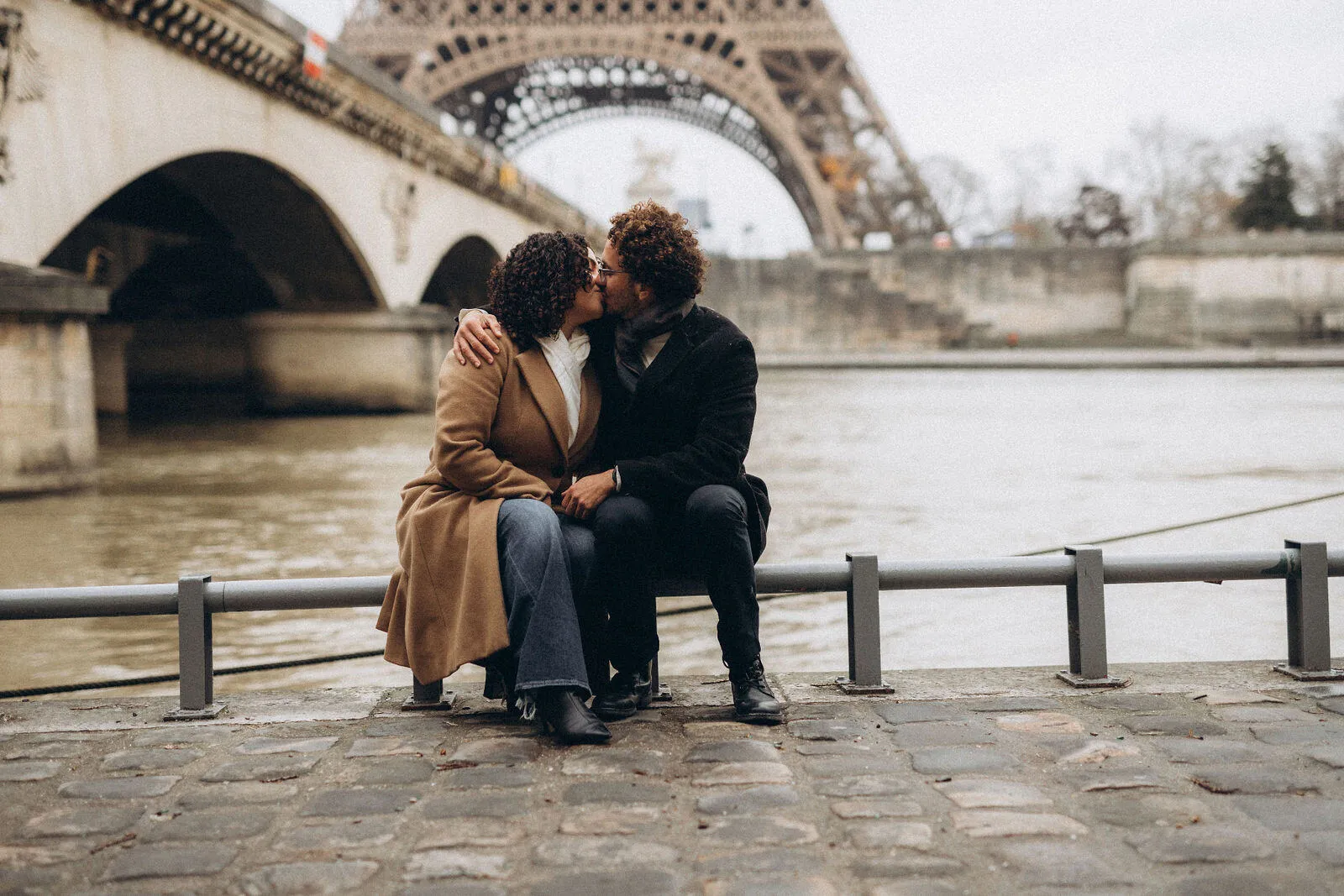
Images of the tower by day are in the public domain and need no authorization. At night, the lighting (golden illumination, sparkles, beacon) is protected. The operator, SETE, says private use needs no approval, while “any professional use of images showing the illuminated Eiffel Tower” requires its prior authorization and may involve fees. In plain terms: your night photos with the sparkling tower are fine for personal use, including sharing with friends; using them commercially (ads, a brand account, products) requires SETE’s authorization. More in our article on Eiffel Tower night photos and the law.
Louvre courtyards and Tuileries garden
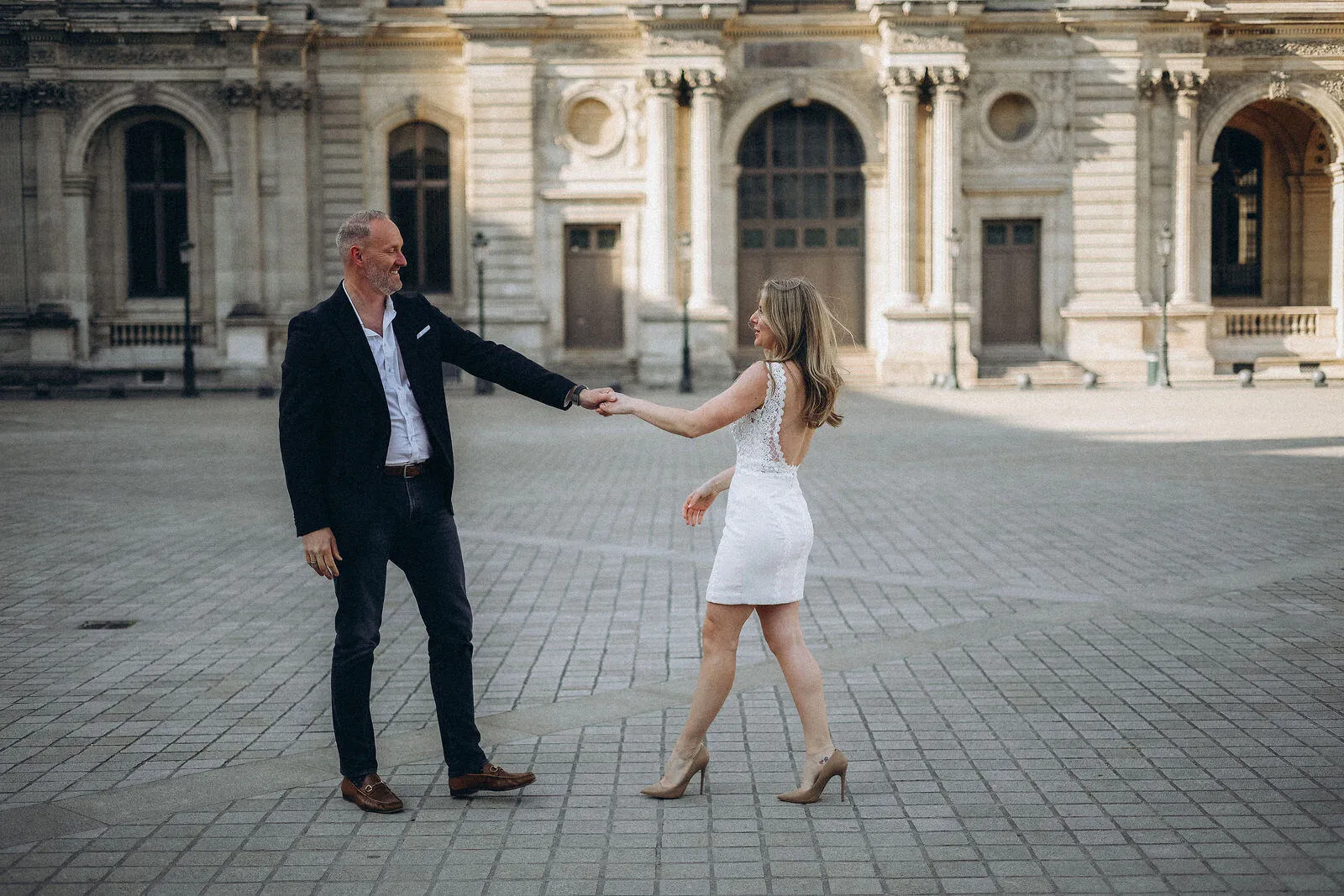
The Louvre manages its own filming. Shoots in the galleries and exterior courtyards (including the pyramid’s Cour Napoléon) are only possible on Tuesdays, when the museum is closed; the Carrousel and Tuileries gardens are available Monday to Friday. Requests go to [email protected]. Its official fee grid (in force since July 2021, per day, excluding 20% VAT) charges, for example, €1,500 for a fashion editorial outdoors and €1,000 for “tourist” photo and film shoots.
The grid has no line for private portrait or wedding sessions, and we found no published Louvre rule for them. Ask your photographer how they approach the courtyards; our Louvre photoshoot guide covers timing and angles.
Palais-Royal and other national monuments (CMN)
The Palais-Royal garden, gallery and colonnades are managed by the Centre des monuments nationaux (CMN). Its published rate card includes a line for non-commercial wedding photos (the couple, one photographer and up to two companions) or group photos: €150 excluding VAT, €180 including VAT, as a flat rate for two hours, with the cost of a site agent not included. The same rate applies at other CMN monuments in Paris, including the Arc de Triomphe, the Conciergerie, the Sainte-Chapelle, the Panthéon, the Hôtel de Sully and the Hôtel de la Marine. Commercial shoots start at €3,000 excluding VAT. Contact: [email protected].
How strictly the CMN applies this rate to a short couple session without a wedding dress is not documented, so ask your photographer.
Jardin du Luxembourg (French Senate)
The Luxembourg garden belongs to the Senate and has its own regulation, dated 2 December 2025. Article 8 states that photo or film shoots “présentant un caractère professionnel” (of a professional nature) need a special authorization; commercial activities and drones are also banned without authorization. The regulation does not say whether a couple session with a hired photographer counts as professional, and we did not find the request procedure for non-parliamentary shoots. Treat it as a place to discuss with your photographer before booking.
Versailles
The Château de Versailles is the strictest of the major sites. Its visitor rules state that in the estate (gardens, park, Marie-Antoinette’s estate) it is “expressly forbidden” to take professional photographs. Inside the palace, flash, tripods and selfie sticks are not allowed; you may photograph the works for private purposes, but professional, collective or commercial use requires prior written permission. Our Versailles photoshoot rules article covers the options in detail.
Disneyland Paris
Disneyland Paris is private property with its own park rules. As of October 2026, its official rules ban tripods, monopods and poles longer than 20 cm when extended, any equipment used for commercial, journalistic or promotional photography or filming, and drones. Visitors’ photos may be used for personal purposes only; any commercial use needs the resort’s prior written authorization.
The Paris metro
RATP, which runs the metro, accepts shoots and photo sessions from professionals only, subject to approval, three to four weeks ahead (eight weeks in July and August) and under a paid contract. Professional shoots in the metro need RATP authorization; keep personal snaps discreet and never block passengers.
Drones, tripods and night photos
Drones. The City is unambiguous: “Hors dérogation de la Préfecture de police, les tournages avec un drone sont strictement interdits dans Paris” (without a police derogation, drone shoots are strictly forbidden in Paris). Only professional operators approved by the civil aviation authority may apply, at least 10 working days ahead, and breaking drone rules is a criminal offense under the French transport code. Do not bring one for your shoot; see can you fly a drone in Paris.
Tripods. They are banned inside the Palace of Versailles, and a tripod is one of the things that makes a session look like a production. If you want one for your own self-timer shots, keep it small, out of walkways, and away from managed sites.
Night photos of the Eiffel Tower. Fine for personal use; commercial use of the illuminated tower needs SETE’s authorization (see above).
Who handles permits: you or your photographer?
Your photographer. Declarations and authorizations are filed by the person or company doing the shoot, and they are the one who knows the local practice. Your part is to ask the right questions before booking:
- Which spots do you suggest, and why? A good answer mentions light, crowds and access rules.
- Does any spot on our list need a permit or a fee, and who pays it? For example, the CMN’s €180 (VAT included) for a two-hour wedding session at the Palais-Royal.
- Is anything we want on the City’s rest list, like Rue Crémieux or the Champ de Mars?
- Do you have professional insurance? The City requires insurance for any type of shoot it authorizes.
- What happens if a guard or official asks us to stop? Usually you move on to the next spot; agree on a backup.
- Will the photos be used commercially? If you are a content creator working with a brand, say so: commercial use changes the rules at the Eiffel Tower at night, the Louvre and elsewhere.
Photographers listed in our directory work in Paris and can tell you how they handle each place. You can search by location, for example photographers who shoot at the Palais-Royal, and ask them directly before you book.
FAQ
Do I need a permit to take photos in Paris as a tourist?
In general, no. Taking your own photos in streets, on bridges and in parks is free and allowed; the City’s principle is the freedom to photograph. Limits come from other people’s image rights, from site rules (for example no tripods or flash inside Versailles) and from commercial use of protected works such as the Eiffel Tower’s night lighting.
Does my photographer need a permit at the Trocadéro?
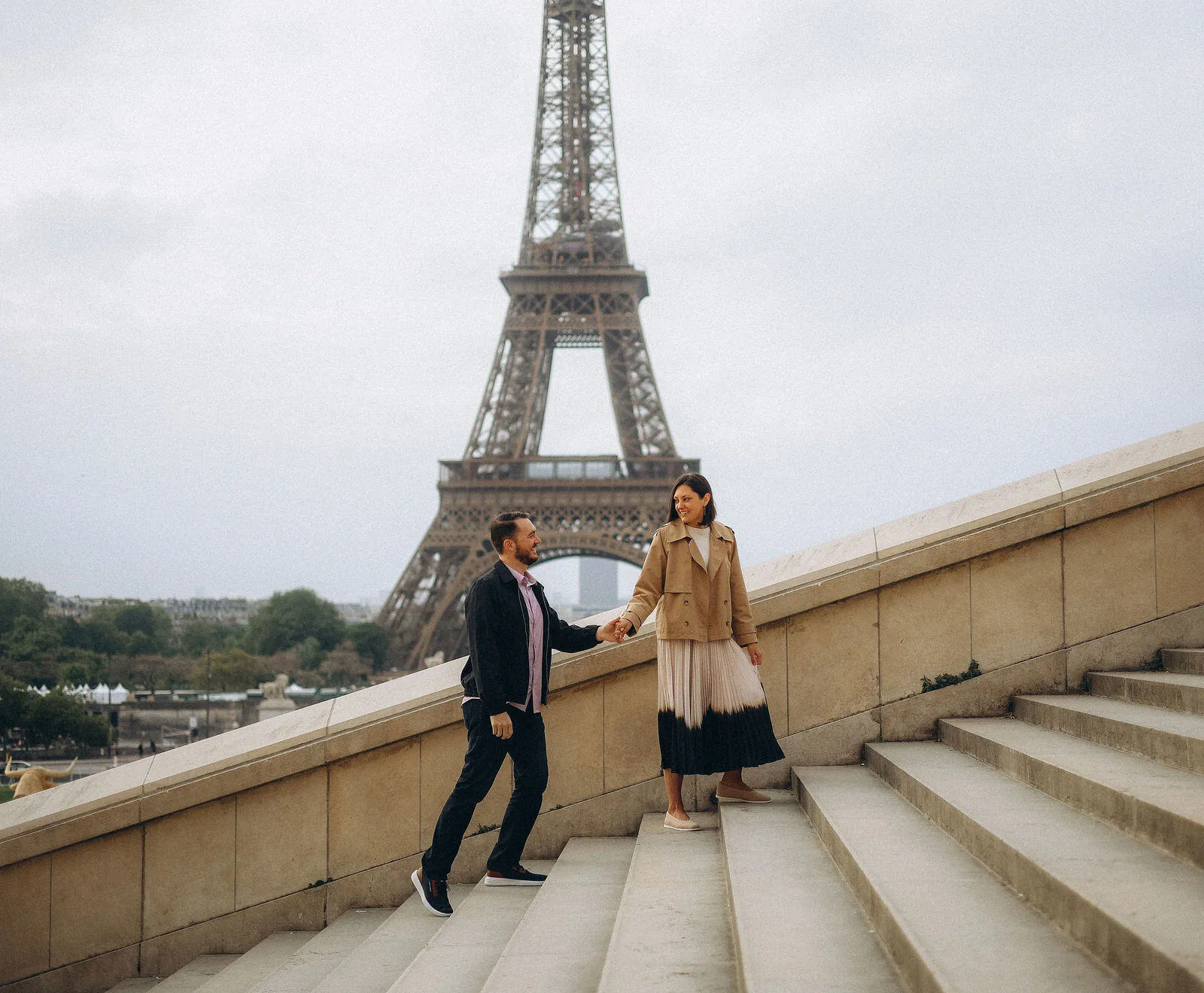
The Trocadéro is not on the City’s list of places rested from shoots. For organized shoots on the esplanade, Paris Film sends requests to the Palais de Chaillot and the Cité de l’architecture, which manage the site. A small private session falls in the same gray zone as most of Paris, so ask your photographer how they work there.
How much does a photoshoot permit cost in Paris?
It depends on the place and the type of shoot. A prior declaration for a small street or bridge shoot carries no fee; authorizations for gardens, parks and other spaces generally involve public-space fees. Managed sites publish their own rates: €150 excluding VAT for two hours of non-commercial wedding photos at CMN monuments like the Palais-Royal, and from €1,000 a day (excluding VAT) at the Louvre for “tourist” shoots.
Can I propose in Paris with a photographer without a permit?
A discreet proposal with one photographer is a private moment in a public place, which falls in the gray zone described above rather than in the production rules. Elaborate setups (signs, decor, musicians, assistants) start to look like an organized event, and managed sites may require authorization. Plan the setup with your photographer.